
Tracing Former Patrick Property Owners
Former owners surface one deed at a time. Start with the newest instrument for the parcel. The deed names a grantor who conveyed the interest and a grantee who received it in Patrick County. Then search that grantor as a grantee in an earlier date range. Repeat, and the chain builds itself. Patrick publishes no cutoff year for its online deed index, so never assume the search reaches a particular date.
| Transfer date | Grantor to grantee | Record to locate | Reference to carry back |
|---|---|---|---|
| Most recent | Prior owner to current grantee | Latest matching deed | Grantor name, book/page, legal description |
| Earlier | Previous grantor to prior owner | Earlier acquisition deed | New grantor, acreage, neighbors |
| Historic | Older named parties or fiduciary | Deed book, court order, or probate record | Book, page, parcel calls, related estate |
Treat this layout as a worksheet, not a real Patrick County transaction. Each entry you pull from the deed books gets its own line. Note the instrument type. Note the date written and the date admitted to record. Note the book and page too. Add the parties, the acreage, the legal description, and any marginal reference. A former-owner trail stays strongest when the legal description keeps matching as the land moves through time.
Patrick’s Online Cutoff Is Unpublished
Patrick County's Clerk dates remote land-record access to July 1, 2017. The service runs $50 a month. Payment covers six months in advance. The county's own page never states the oldest year indexed through SRA. The portal itself gives no clear coverage window or result fields. So a remote-access start date proves nothing about whether deed records before 2017 exist. It only marks when the online door opened.
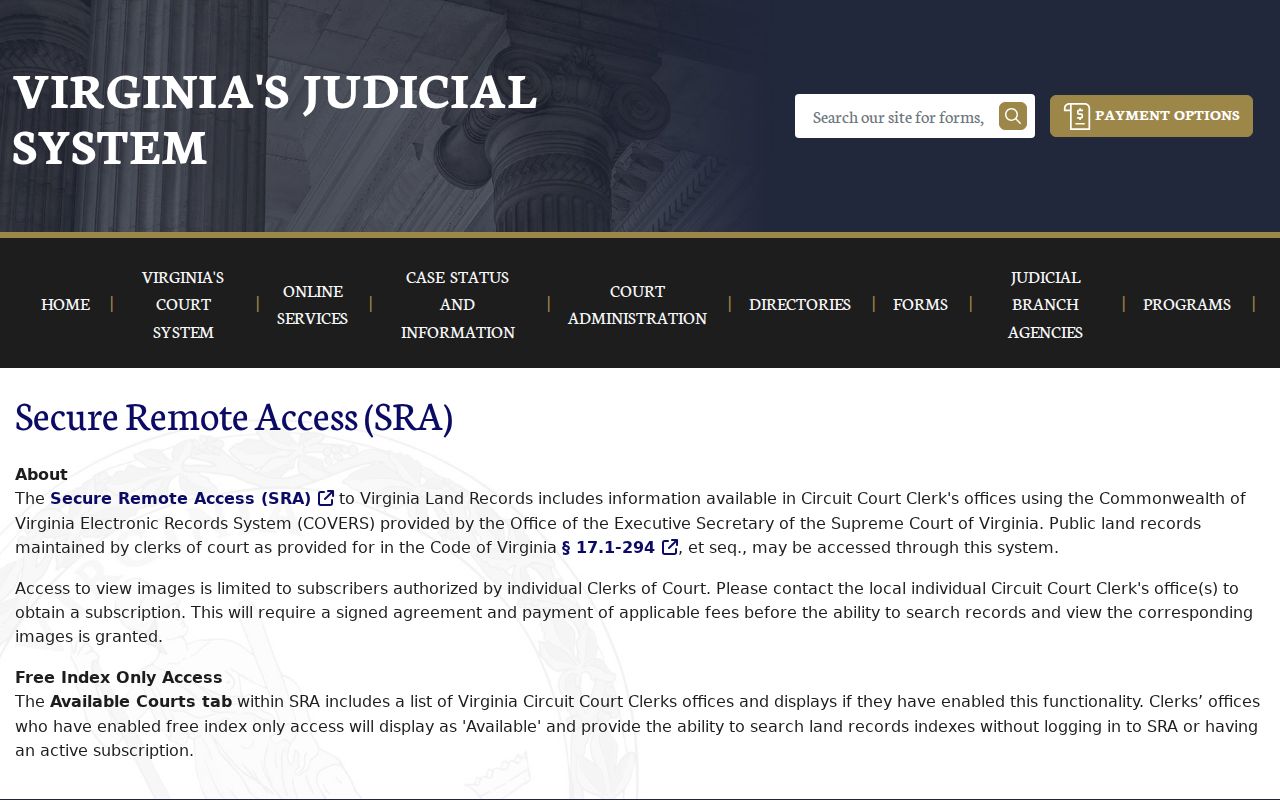
Virginia SRA instructions let a clerk switch on free index-only access. Images stay limited to authorized subscribers. Check Patrick County's live terms with the Clerk before relying on either tier. A name result with no image attached is still a lead. Record the citation and request the instrument itself. Ask the copy fee rather than assuming a statewide price.
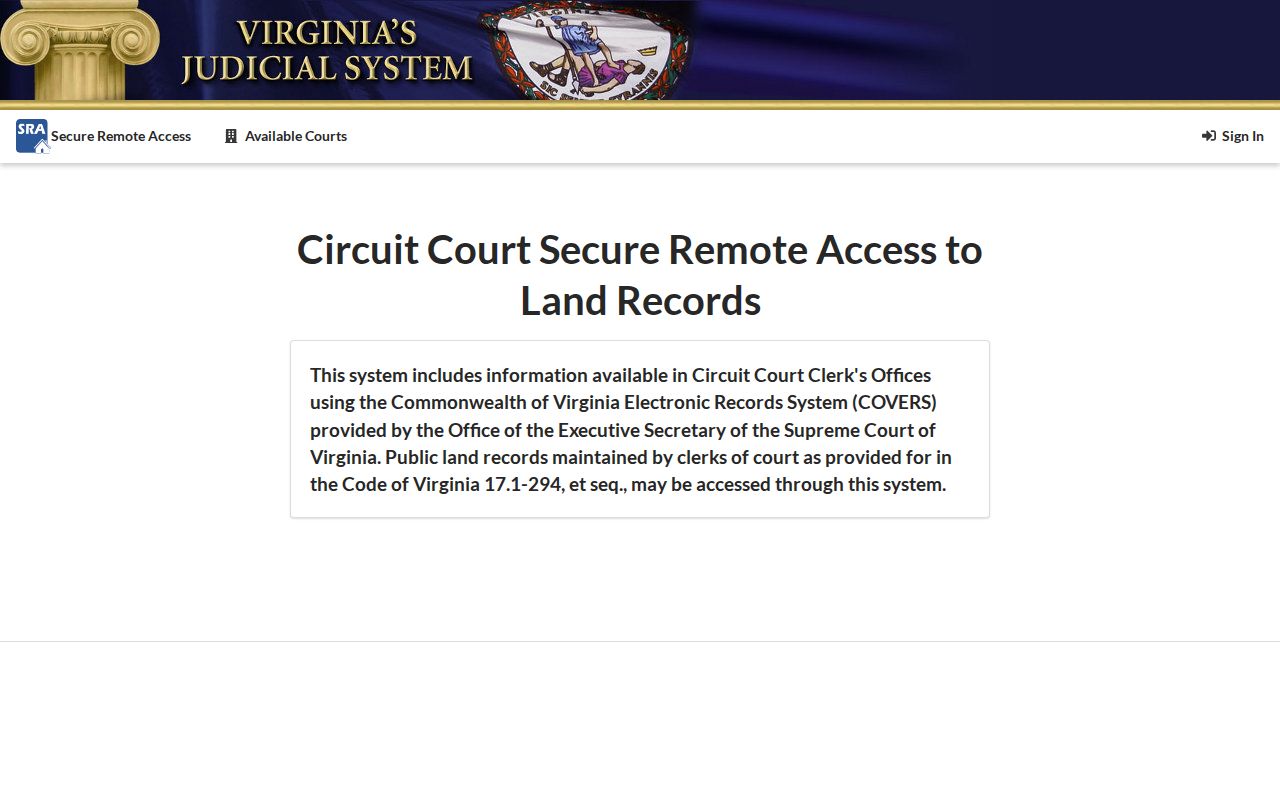
When the online route runs dry, physical deed books still work. So do the Library of Virginia catalog, probate records, and court orders. One search screen's limits do not define Patrick County's history. Open the Virginia SRA portal for the remote deed-record entry page shown here.
Open the Virginia Courts SRA page for the free index and subscriber image rules shown here.
Walking a Patrick Chain Backward
Start with the newest deed describing the parcel. Copy the grantee, the grantor, the recorded date, the document reference, and the full legal description. Next, hunt that grantor as a grantee in an earlier date range. When the acquisition deed surfaces, repeat the step with its grantor. Test each entry against acreage, adjoining owners, road or creek calls, and any cited plat. A name may match while the description does not. That may point to a different tract altogether.
- Start with a current parcel reference and locate a recent deed in the Clerk’s index.
- Read the grantee and grantor roles from the recorded instrument.
- Search the earlier grantor as grantee and compare the land description.
- Follow references to a plat, release, correction deed, or court order.
- Stop when the index fails, then identify the relevant old volume or probate link.
Old Patrick County deeds describe land the rural way. They lean on acreage, streams, roads, mountains, and the names of adjoining landowners, and many early instruments carry no parcel number at all. Copy the wording exactly as written, because quietly swapping in a modern map label can break the trail back through the property records.
Patrick Deed Roles Mark Each Transfer
Every deed transfer in Patrick County has two key roles. The grantor gave up an interest; the grantee received it. Follow those pairs across time and you have a chain of title. That chain is the full sequence of transfers and other instruments touching one parcel. The index points you to names and references. The recorded deed itself holds the legal description and the controlling language. A warranty deed and a quitclaim deed make very different promises. The instrument's title is only a hint. Read the text to know what it actually conveys.
- Grantor
- The party who conveyed the interest shown in an instrument.
- Grantee
- The party named as receiving that interest.
- Chain of title
- The linked history of conveyances and relevant intervening records for the land.
- Book/page
- The locator used to request a volume entry; preserve it exactly.
Watch for capacity language when parties appear as trustees, executors, administrators, commissioners, or heirs. That label matters. Probate or court records may hold the authority behind the conveyance, but they never replace the deed itself as the recorded transfer reference for the parcel.
Patrick’s Chain Reaches Deed Book One
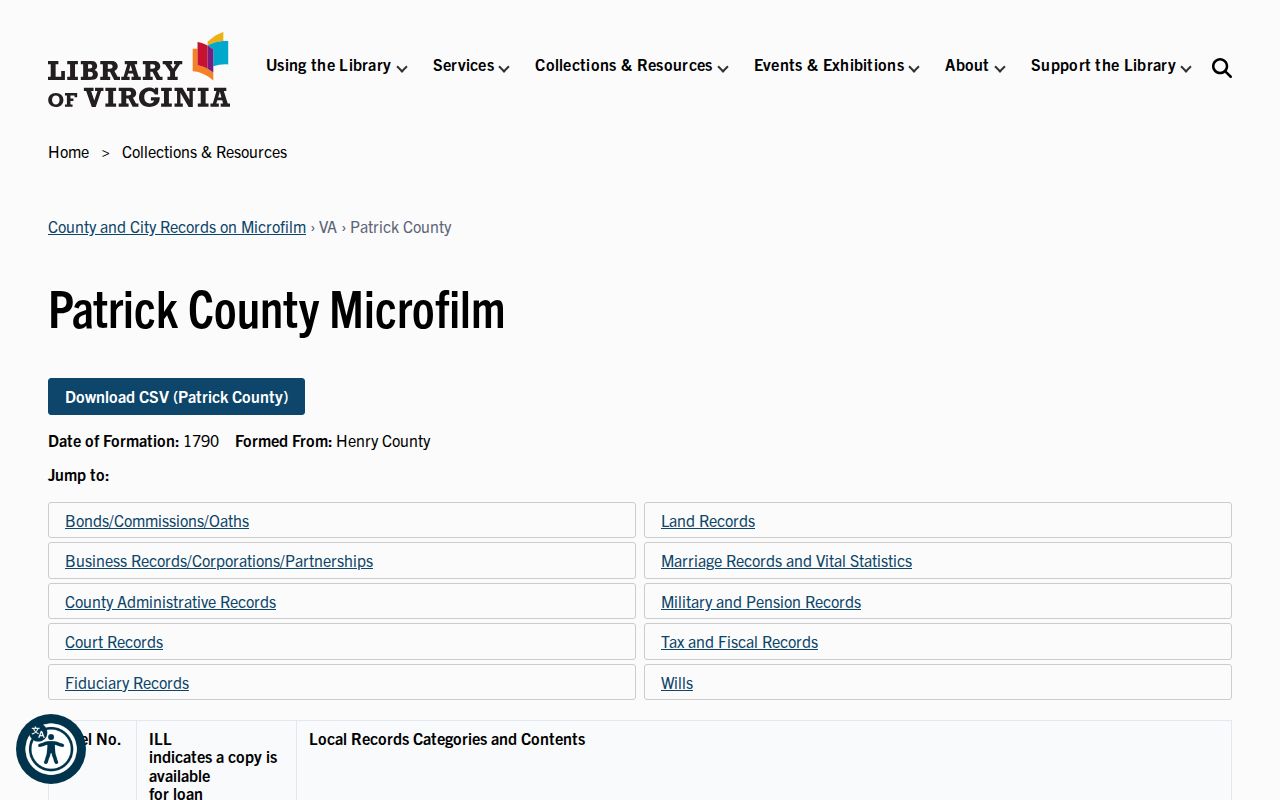
Patrick County's chain of title reaches back to Deed Book 1. The Library of Virginia catalog lists it for 1791 through 1801. It has 724 pages. The index is unpaged or mutilated. Book 2 covers 1801 through 1806. Book 3 spans 1807 through 1813. It also has a mutilated index. Book 4 runs from 1813 through 1817. Together these volumes form the county's earliest surviving land-record run. A plain name search may miss an entry in these oldest books.
Try alternate spellings and the tract description. A later deed often repeats an acreage figure, a stream, a road, or an adjoining owner. Those details can pin down an earlier conveyance. The index pages cannot always be followed. The Clerk or an archive reader may then need to inspect the book directly. Some LVA reels circulate through interlibrary loan.
For the historic record source shown here, one source stands out. Consult the Library of Virginia Patrick finding aid.
Patrick Probate Records Fill a Gap
When death interrupts a person-to-person chain of title, probate usually holds the answer. Patrick's Clerk keeps wills and probate. LVA lists Will Books 1 through 9 from 1791 to 1921. General indexes to wills and administrations cover 1791 through 1974 in alphabetic segments. Estate papers can name an executor or administrator. They may also list heirs, an inventory, an appraisement, a sale bill, or a court-authorized transfer. That explains the next puzzle. The next deed may name an estate representative rather than the last individual owner.
To work the gap, find the decedent's will or administration entry and identify the fiduciary. Then search the land records for an executor's, administrator's, or commissioner's deed. A deed of distribution, life estate, or gift may also shape the names. These instruments can shift ownership between generations. The assessment roll can lag behind such a transfer. The recorded instrument, backed by court authority, is the better evidence of the conveyance.
Patrick genealogy requests to the Clerk must be mailed. Include the copy fee and a self-addressed stamped envelope. Phone and email genealogy requests are not accepted.
Patrick Court Books Show Land Changes
Deeds are not the only historic entries that move a chain. The LVA catalog lists Patrick County order books from 1791 through 1864. It also holds chancery and common-law books from 1831 onward. A partition, land dispute, quiet-title, or commissioner-sale order may explain a change in ownership. It can show why the land passed through a court rather than a deed. Board of Review of Assessments material covers 1915 through 1926. That adds valuation context, though it is no substitute for a modern owner search.
When an instrument cites a court order, record the case or order citation. Ask the Clerk how to request the file itself. A docket or order may identify the parties and the authority behind the transfer. Still, tie the deed back to the parcel description. Do the same with any other recorded land instrument before trusting the chain.
Taylorsville Names Precede Stuart
Stuart began as Taylorsville in 1792. The town was incorporated and renamed Stuart in 1884. A deed from the earlier period may use Taylorsville as its place clue. Later property records may instead reference the courthouse core, Uptown, Downtown, or the railroad depot. The 1822 courthouse and the separate Uptown and Downtown historic districts help orient those descriptions. They do not replace a legal boundary. When tracing prior owners around Stuart, search both the old and later place names where the index permits. Boundaries moved too. The 1939 charter annexed two parcels, another sign the town line changed. Match the charter, the recorded deed, and any plat reference against the current parcel. That places the historic description.
Requesting Patrick’s Older Deeds
Gather the essentials before contacting the Clerk or LVA. Owner names and an approximate date range sharpen the request. So do acreage and any book/page reference. Phrases from the legal description help too. Ask for a physical book, reel, index, or image by its exact catalog title. The Clerk's genealogy procedure is mail only. It requires a fee plus a self-addressed stamped envelope. For other deed copies, confirm current charges and certification options directly. The office publishes no full fee table.
The Library of Virginia's finding aid identifies reel groupings. It also notes interlibrary loan for some materials. A catalog entry helps you request the right source. It does not guarantee a viewable online image. Keep notes on every spelling and reference you try. Early unpaged indexes reward a second, targeted pass.
What a Patrick Owner Chain Can Establish
A deed chain documents recorded transfers, yet it cannot guarantee clear title. Look for deeds of trust, releases, easements, judgments, lis pendens, probate documents, and corrective deeds. Court orders touching the property matter too. Compare legal descriptions. Follow each book/page cross-reference. A name-only chain can miss a boundary change or a fiduciary transfer.
Verify the legal record. A GIS label is not title proof, and this guide is not a title opinion. Have a title professional review the complete record when a purchase, transfer, or claim depends on it.
Patrick County's online deed records reach back only so far. The exact cutoff is unclear from published sources. For older ownership, move from the online index to the Clerk's books and the LVA catalog rather than assuming the oldest web result marks the start of the chain.