
Patrick Deed Records Show Recorded Transfers
The Circuit Court Clerk holds every recorded Patrick County deed. Each deed names the parties. It also states the interest conveyed. It carries its own legal description and recording reference. A deed can document a transfer or clarify how a tract is described. Still, it is not a title opinion. The same Clerk keeps plats, deeds of trust, releases, judgments, wills, and probate files. Search the index by party name, but confirm the actual instrument before trusting a hit.
| Instrument | What it may show | Patrick record route |
|---|---|---|
| General or special warranty deed | Transfer from grantor to grantee, legal description, stated consideration | Clerk’s land-record index and recorded image |
| Quitclaim or gift deed | Interest conveyed without the same warranty language | Search party names and read the instrument terms |
| Trustee, executor, or commissioner deed | Transfer carried out under a trust, estate, or court authority | Clerk land records; related probate or court file may explain authority |
| Deed of trust and release | Security interest and a later recorded satisfaction or release | Clerk’s index; follow the reference to the later release |
| Plat, easement, or boundary agreement | Recorded lot drawing, access right, or agreed line | Clerk’s plat and instrument records |
Treat these categories as a checklist. The Clerk's static page omits the live SRA menu options. Whatever the menu shows, the instrument image and its own legal language control what the record says.
Patrick’s SRA Index and Images Differ
Virginia's Secure Remote Access system is the remote path to Patrick County land records. Its statewide page lets a clerk enable free index-only access. Images reach only authorized subscribers remotely. Patrick's remote service began July 1, 2017. The cost is $50 per month. Payment runs six months in advance. That is a subscription term rather than any published index cutoff year. No oldest year, result cap, or search-field list is published.
When a likely entry turns up, capture the grantor, grantee, recorded date, instrument type, book/page or document number, and parcel description. If the image is unavailable, contact the Clerk. Ask about the access application or a document request. The office sits at 101 W. Blue Ridge Street in Stuart. Its listed deed-recording hours are 9 a.m. to 4:30 p.m. No complete copy-fee schedule is published. Ask the fee amount before sending payment.
In practice, the difference between an index and an image matters. An index identifies the filing. The document text shows what was signed, admitted, and described. Virginia's remote-access rules also limit displayed Social Security numbers to the last four digits where applicable. Review the Virginia Courts SRA page for the current rules on index and image access.
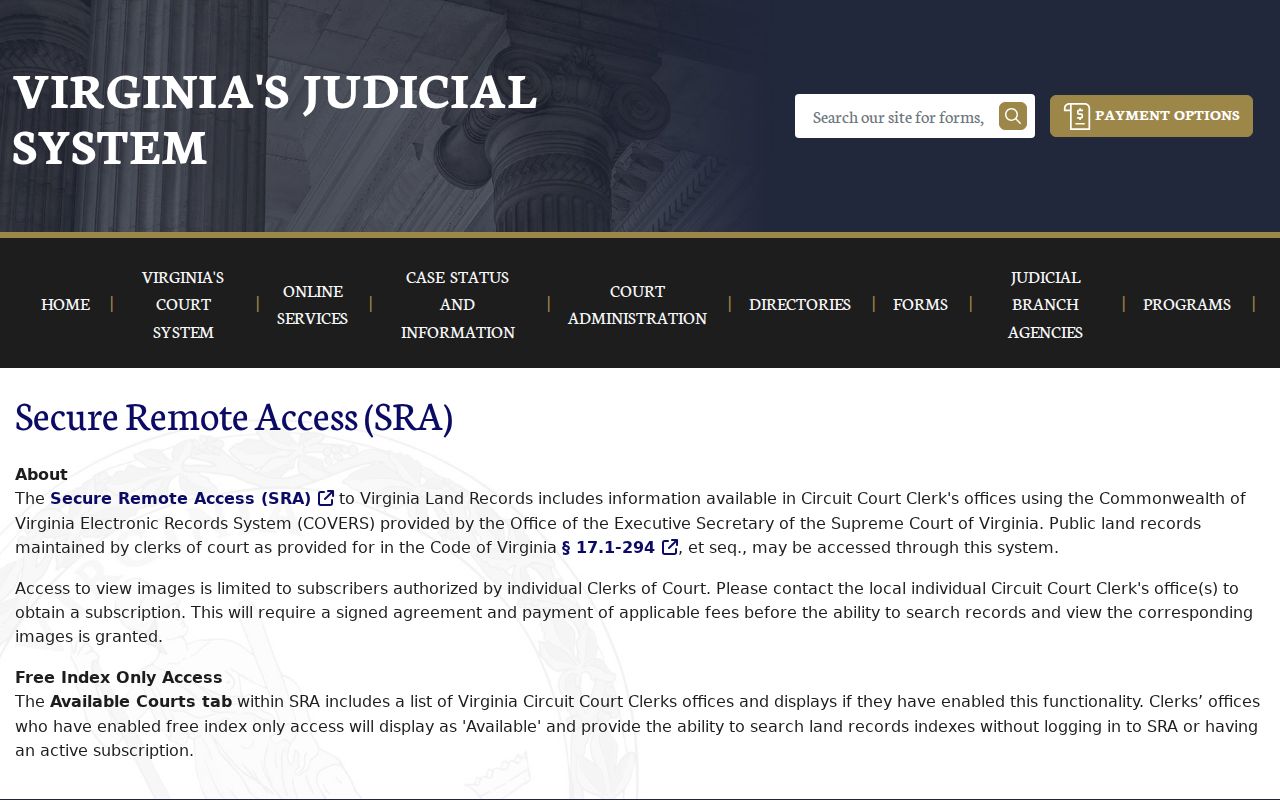
Open the Virginia SRA portal for the Patrick land-record entry point shown here.
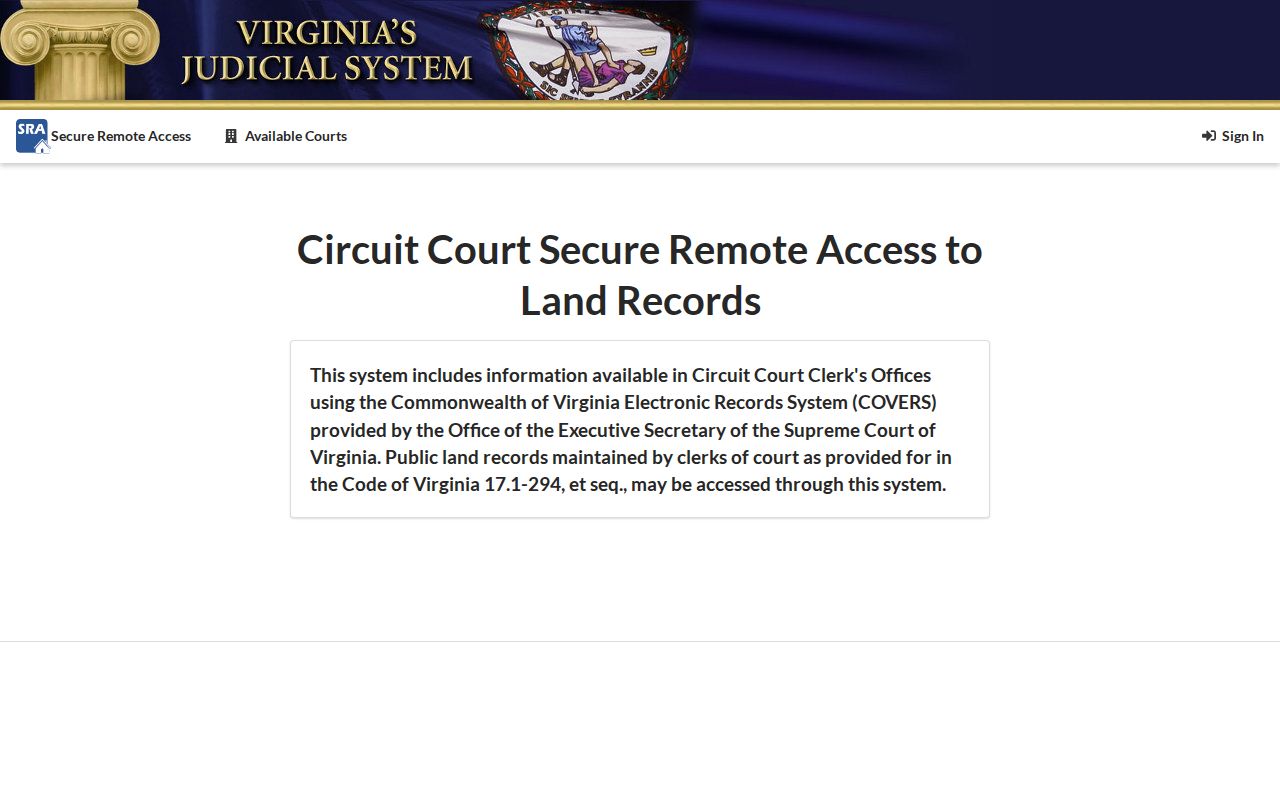
Read Both Sides of a Patrick Deed Index
Grantor and grantee are roles, not interchangeable labels. The grantor conveys the interest. The grantee receives it. To verify one recorded transfer, search both names where the system permits and compare the deed's recording reference. A later deed may name a trustee, executor, administrator, commissioner, or business entity, so read the instrument rather than assuming an individual owner.
For a single deed request, start with the likely new owner as grantee. Then look for the conveyance from the previous owner. Note the recording date and the legal description. The same person can appear under initials, a middle name, a married name, or a spelling variation. Trust and estate documents may put a fiduciary between a decedent and an heir. The instrument tells you which role that person held.
Older Patrick deeds may lack a modern tax-map number. Link a historic entry to a current parcel by comparing acreage, adjoining owners, roads, streams, and the book/page reference. The property-search guide explains the address-to-map route for anyone starting from a location rather than a deed citation. Start there if you have only an address.
Patrick Deed References Need Context
A book/page number is just a locator. It does not describe the transaction. Keep the recorded date and signing date separate. Read the grantor and grantee names, instrument type, stated consideration, legal description, acreage, and any referenced plat. Check the clerk's certification and marginal notes for a later release, correction, or related filing. A name-only result shows no parcel.
Patrick's Clerk page publishes no full copy-fee table. For a certified or uncertified copy, give the exact reference and ask the Clerk for the current amount and format. If you lack a citation, include the parties, a rough date span, and the land description. A clear request matters. It reduces the chance of getting a deed for a different person with the same name.
- Grantor
- The named party who conveys an interest in a recorded instrument.
- Grantee
- The named recipient of the interest conveyed by that instrument.
- Book and page
- A reference within a volume; preserve it exactly when requesting a copy.
- Legal description
- The written land description in the deed or its referenced plat.
Patrick’s Earliest Deed Books Need Patience
Patrick County's oldest deed books demand patience. Deed Book 1 spans 1791 to 1801 and runs 724 pages. Its index is described as unpaged or mutilated. Book 2 covers 1801 through 1806. Book 3 reaches 1807 to 1813 with another mutilated index, and Book 4 closes at 1817. Parcel numbers did not exist then. The old index offers no clean alphabetic route to every entry, so patience pays. Use every surviving clue: alternate spellings, a neighboring landholder, acreage, a watercourse, a road, and the date of a later conveyance.
LVA catalogs more than deeds. Patrick order books run 1791 through 1864, chancery and common-law series begin in 1831, and wills and administrations complete the holdings. A partition order or estate record may explain why a later deed names an unexpected prior owner. The Library of Virginia catalog lists local reels. Interlibrary loan is available for some. Consult the Library of Virginia Patrick finding aid for the historic catalog source behind these entries.
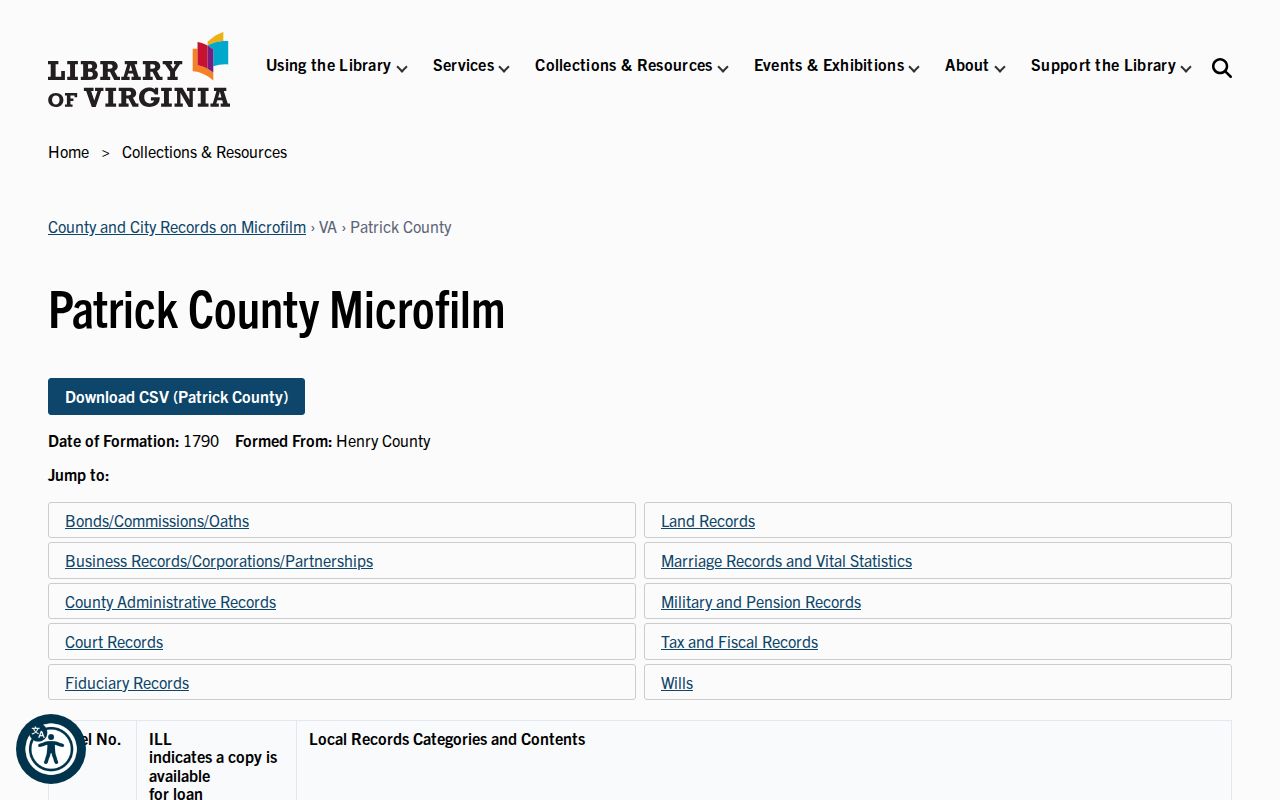
Taylorsville Appears Before Stuart
Patrick County formed from Henry County in 1790. The seat now called Stuart began as Taylorsville, established in 1792. It was incorporated and renamed Stuart in 1884. A deed or court book from the earlier years may cite Taylorsville as the place reference. Later records orient the same ground by courthouse, Uptown, the railroad depot, or Downtown. Those old terms help when a modern address is missing from the instrument.
The 1822 courthouse anchors the Uptown records geography. Railroad work in the early 1880s fed commercial growth near the depot. A historic district description can clarify a place name. It cannot replace a legal description or prove that a parcel sits inside a district. Match the recorded plat and deed to the parcel. Never translate a neighborhood label into a boundary.
Patrick Land Records Include More Than Deeds
A title search in Patrick County often needs more than deeds. Fee ownership is only part of the record. Deeds of trust show a security interest. Assignments, modifications, and releases show its later status. Easements and rights-of-way may explain access across a parcel. Boundary agreements, plats, and subdivision instruments can clarify how land was divided. Judgments, mechanic's liens, lis pendens, and court orders add context, though the county's index may not label every category neatly.
Search the relevant parties and follow references forward. A deed of trust should be checked against a later release or satisfaction. A lien question may require a court file. A business entity can push the search to the state level, since the Virginia SCC's UCC and federal tax-lien system sits apart from county land records and never substitutes for the Clerk's index.
Probate records can explain a conveyance by an executor, administrator, or commissioner. Patrick's LVA catalog lists Will Books 1 through 9, from 1791 to 1921, with general will and administration indexes through 1974. Those entries support house-history and chain research. The deed remains the recorded land-transfer instrument.
Requesting a Patrick Deed Copy
A deed copy starts with a precise citation. Send the book and page or document number. Include the parties and an approximate recording date. Say whether you need a certified copy. If the citation is uncertain, add the parcel's tax-map number, acreage, legal description, and any known adjoining names.
Ask about the present copy charge and delivery method. The county publishes the remote subscription rate but not a complete per-page fee schedule. Genealogy requests follow a published mail process with the fee and a self-addressed stamped envelope. Phone and email genealogy requests are not accepted. A remote SRA subscription may show images once the local clerk authorizes access. Index-only access may be free if Patrick enables it, so confirm availability in the live system. For historic records, use the LVA catalog to identify the book or reel, then ask the Clerk whether a physical original or certified copy is required.
GIS Labels Do Not Control Patrick Title
InteractiveGIS can help you find a tax parcel. Patrick's own terms limit it to mapping and reference. Updates are not immediate. The viewer itself warns against using it to buy or sell land. Recorded plats and deeds remain the authoritative sources for legal acreage and ownership. If a map label differs from a deed, ask the Clerk or Tax Mapping office which source record applies instead of trusting the newer-looking screen.
Record, map, survey. A deed search is not a title opinion, and a tax-map outline is not a survey. Have legal and boundary questions reviewed by the right professional.
For a single instrument, use the Clerk's index. For a longer ownership timeline, the separate former-owner guide describes how to walk backward through grantor and grantee entries.